Top 5 Benefits of Writing Camps for Aspiring Songwriters

Writing camps have long been a secret weapon for established songwriters and major label rosters. But they are no longer reserved for the industry’s inner circle. More and more aspiring songwriters are gaining access to these intensive creative sessions, and the benefits go far beyond simply writing a few songs in a short space of time. For emerging writers looking to develop their craft, build connections, and understand how professional music gets made, a writing camp can compress years of learning into a single week.

Here are five reasons why every aspiring songwriter should be looking for their next camp.

1. You Learn to Write Under Pressure

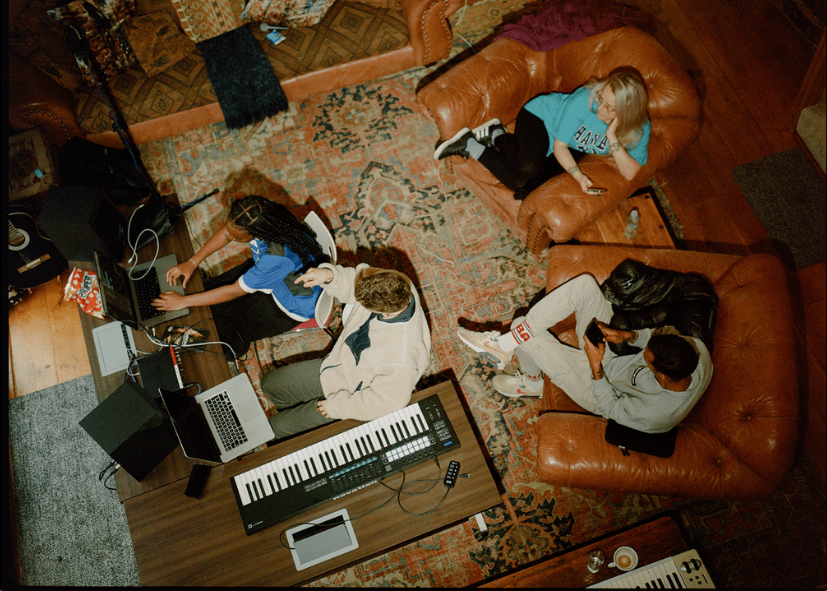
One of the hardest skills for any songwriter to develop is the ability to finish. It is easy to start ideas. It is much harder to take a concept from nothing to a completed demo in four to six hours with people you may have just met. Writing camps force that discipline because the schedule demands it. There is no room for spending three weeks on a chorus or endlessly tweaking a verse melody. You sit down, you create, and you deliver.

This might sound stressful, but it is genuinely liberating. Many aspiring writers hold themselves back by overthinking every decision. A writing camp strips that away. You learn to trust your instincts, commit to ideas quickly, and move forward rather than backwards. That skill stays with you long after the camp ends, and it transforms how you approach every writing session that follows.

2. You Get Exposed to Different Working Styles

Most songwriters develop their process in isolation or within a small circle of regular collaborators. That is natural, but it can become limiting. At a writing camp, you rotate between rooms and work with producers, topliners, and instrumentalists who approach music completely differently from you. A producer who builds beats from the drums up will challenge a writer who always starts with chords. A topliner who writes melody first will push someone who usually leads with lyrics.

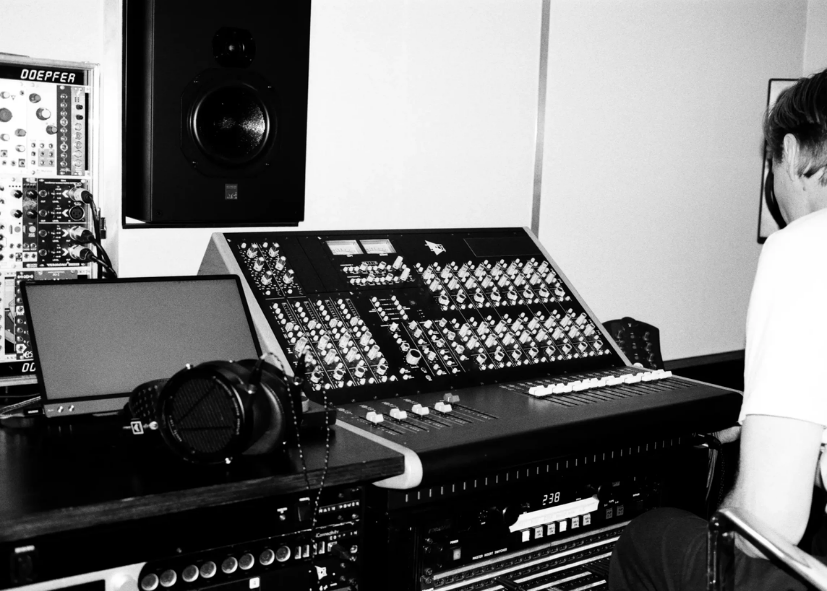
The best studios for recording these sessions provide multiple rooms with different setups, so each rotation feels distinct. One room might be built around a laptop and a vocal mic. Another might have a full live room with outboard gear and acoustic instruments available. That variety forces you to adapt and respond to your environment, which is exactly what professional songwriting demands.

3. You Build a Network That Actually Matters

The music industry runs on relationships. Not LinkedIn connections or Instagram follows, but genuine creative relationships built through shared work. A writing camp is one of the fastest ways to build those. You spend days working closely with other writers and producers, eating meals together, hearing each other’s playbacks, and pushing through creative blocks as a team. The bonds formed in that environment are real because they are forged through the work itself.

Many of the most successful co-writing partnerships in modern pop, R&B, and electronic music started at writing camps. For aspiring songwriters, the contacts made at a single camp can open doors to future sessions, introductions to publishers, and opportunities that would otherwise take years to find organically.

4. You Hear Your Work in a Professional Environment

There is a significant difference between hearing a demo on your laptop speakers and hearing it played back through properly calibrated monitors in a treated room. Writing camps held in professional recording facilities give aspiring writers the chance to hear their music the way industry professionals hear it. That experience is educational in itself. You start to notice things about your productions, your vocal arrangements, and your mix decisions that bedroom monitoring simply cannot reveal.

For camps hosted in studios with advanced capabilities like Dolby Atmos mixing, there is also the opportunity to experience immersive audio production firsthand. Understanding how spatial audio works and hearing your music rendered in three dimensions is the kind of exposure that sets forward-thinking writers apart from the crowd.

5. You Leave with Finished Material

This is the most tangible benefit. A typical writing camp produces one to two finished demos per session, per room. Over the course of a three to five day camp, that adds up to a serious body of work. For an aspiring songwriter, leaving with five or more completed songs that were written collaboratively and produced to a professional standard is invaluable. Those tracks can become portfolio pieces, demo submissions to publishers, sync pitches, or even the foundation of your own release.

More importantly, the act of finishing that many songs in rapid succession builds creative confidence. You prove to yourself that you can deliver consistently, which is the single most important trait any professional songwriter can have.

Finding the Right Camp

Not all writing camps are created equal. The quality of the facility, the curation of the writers, and the support from organisers all make a difference. Look for camps hosted in established studios for recording that offer proper acoustic environments, experienced in-house engineers, and flexible room configurations. The right setting does not just support the creative process. It elevates it.

Thinking about hosting or joining a writing camp? Get in touch with the Baltic team to discuss room availability, studio configurations, and how we can help make your next camp a success.

What Is Dolby Atmos and Why Is It Changing Music Production?

Dolby Atmos has moved from cinema screens into mainstream music production faster than almost anyone predicted. With Apple Music, Tidal, and Amazon Music now supporting spatial audio natively, the format is no longer experimental. It’s becoming the baseline expectation for professional releases. For artists, producers, and engineers working in any East London music studio today, understanding what Atmos offers is no longer optional.

How Dolby Atmos Works

Traditional stereo restricts audio to two channels, left and right. Surround sound expands that to a horizontal plane, but Atmos goes further by adding a vertical dimension. It’s an object-based format, meaning individual sounds can be placed and moved precisely within a three-dimensional space, above, below, and around the listener.

In practice, this gives mix engineers far greater control over how each element in a track is perceived. A vocal can sit directly in front of the listener while the reverb decays upwards. A synth pad can move slowly across the room. The result is a listening experience that feels spatial and immersive rather than flat.

Why Atmos Matters for Artists and Producers

  • > Platform prioritisation. Apple Music actively promotes Atmos-enabled tracks through curated playlists and algorithmic recommendations. Artists releasing in spatial audio gain visibility that stereo-only releases do not.
  • > Greater creative control. Atmos allows producers to separate elements that would traditionally compete for the same frequency space in a stereo mix. This means cleaner, more detailed mixes with room for every instrument and vocal to breathe.
  • > Future-proofing your catalogue. As spatial audio adoption grows across headphones, speakers, car systems, and VR, tracks mixed in Atmos will continue to translate well across new playback environments. Stereo mixes may increasingly feel limited by comparison.
  • > Industry direction. Major labels are already requiring Atmos deliverables alongside stereo masters for new releases. Independent artists and producers who adopt the format now position themselves alongside that standard rather than behind it.

What You Need to Record and Mix in Atmos

Working in Atmos requires more than software. A properly calibrated monitoring environment with overhead speakers is essential for making accurate spatial decisions during mixing. This is where studio recording facilities with purpose-built Atmos rooms become critical, as the format cannot be mixed reliably on headphones alone.

Equally important is working with engineers who understand object-based workflows, bed and object routing, and the delivery specifications required by different streaming platforms.

Atmos at Baltic Studios

At Baltic’s recording studios East London, our Atmos suite is designed for exactly this kind of work. From tracking through to spatial mixing and mastering, our engineering team brings hands-on experience across music, film, and broadcast Atmos production. Whether you’re an established artist looking to release in spatial audio or an emerging act exploring the format for the first time, we can help you get it right.

Interested in recording at Baltic Studios? Get in touchto book a session or discuss your project.