Atmos vs. Stereo: The Key Differences Explained

For the best part of a century, stereo has been the standard format for recorded music. Two channels, left and right, creating a soundstage between a pair of speakers or headphones. It is a format so embedded in how we listen that most people never question it. But spatial audio has begun to change the conversation. Dolby Atmos, the most widely adopted immersive audio format, is now supported by Apple Music, Tidal, and Amazon Music. The Grammy Awards introduced a dedicated category for immersive music in 2019. And a growing number of studios, including Baltic Studios in London, have invested in full Atmos monitoring to meet rising demand.

So what actually separates Atmos from stereo, and why should artists and producers care?

How Stereo Works

Stereo audio uses two channels to create the impression of width. The mix engineer places each element somewhere along a horizontal line between left and right. Panning, level balance, and reverb create the illusion of space, but the soundstage remains fixed to a single plane. Everything happens in front of you.

This approach has served music extraordinarily well. Decades of iconic records were mixed in stereo, and the format’s simplicity is part of its strength. It works on virtually every playback device ever made, from vintage hi-fi systems to budget earbuds. No special hardware required, no compatibility checks. It just plays.

The limitation is that stereo is inherently two-dimensional. Two instruments occupying similar frequencies can blur together, and the mix engineer’s only tools for separation are EQ, compression, and panning across that single horizontal axis.

How Dolby Atmos Changes the Picture

Dolby Atmos is an object-based audio format. Rather than routing sounds to fixed channels, it stores each element’s position as metadata: X, Y, and Z coordinates in a three-dimensional space. When the mix is played back, a renderer reads that metadata and translates it to whatever speaker layout or headphone setup the listener is using.

This means a single Atmos mix can adapt to a 7.1.4 speaker array, a soundbar, a pair of AirPods, or a car stereo. The renderer decides how to distribute the audio rather than the mix being locked to a specific number of outputs. It is a fundamentally different approach to delivering sound.

Where stereo gives you width, spatial audio adds height and depth. Instruments can be placed behind, above, or around the listener. Vocals can sit at the centre of a three-dimensional field while guitars, strings, or synths move around them. The result is a listening experience closer to being inside the music rather than in front of it.

The Technical Differences That Matter

The core distinction comes down to channels versus objects. Stereo is channel-based: two outputs, fixed in the mix. Dolby Atmos supports up to 128 audio tracks, including 118 discrete sound objects that can be independently positioned and moved in real time.

One practical benefit is spatial unmasking. In a stereo mix, two sounds with similar frequency content compete for the same space. In an Atmos mix, those sounds can be physically placed in different positions. Separation becomes a matter of location rather than frequency carving, often resulting in a cleaner, more natural mix.

Atmos also handles translation between playback systems automatically. A stereo mix sounds the same on every system because it is fixed. An Atmos mix is dynamic: the renderer optimises the output for whatever device is playing it, from a full studio monitoring rig down to a phone speaker.

Does Stereo Still Have a Place?

Absolutely. Stereo is not going away. The vast majority of music is still released, consumed, and enjoyed in two channels. Many genres and production styles are perfectly suited to the format, and there is an enormous body of engineering knowledge built around getting the most from it. A great stereo mix, made by a skilled engineer in a well-treated room, remains a powerful thing.

What has changed is that artists now have a choice. Immersive audio is no longer a niche format reserved for cinema. It is available on the streaming platforms listeners already use, and the tools for creating Atmos mixes are increasingly accessible. For many projects, delivering both a stereo and an Atmos mix is becoming standard practice.

Where Baltic Fits In

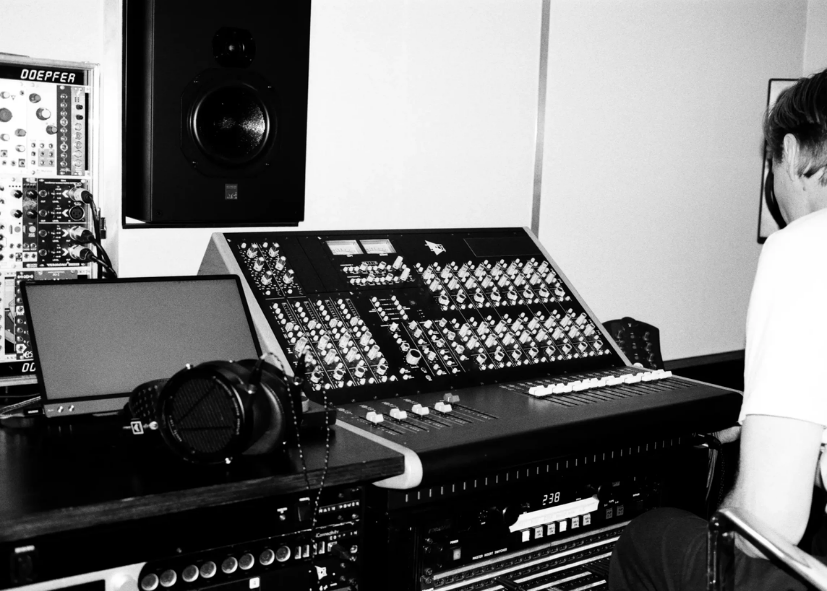
At Baltic Studios, Studio 3 is equipped with a full 7.1.4 ATC Atmos monitoring system and an API ‘The Box’ console, with Atmos services provided in-house by engineer Digby Smith. Recently shortlisted for Small Commercial Studio at the MPG Awards 2026, Baltic is one of a small number of independent studios in London where artists can work in both stereo and immersive formats under the same roof.

Interested in hearing your music in Atmos? Get in touch with the Baltic team to book a session or learn more about immersive audio production.