Atmos vs. Stereo: The Key Differences Explained

For the best part of a century, stereo has been the standard format for recorded music. Two channels, left and right, creating a soundstage between a pair of speakers or headphones. It is a format so embedded in how we listen that most people never question it. But spatial audio has begun to change the conversation. Dolby Atmos, the most widely adopted immersive audio format, is now supported by Apple Music, Tidal, and Amazon Music. The Grammy Awards introduced a dedicated category for immersive music in 2019. And a growing number of studios, including Baltic Studios in London, have invested in full Atmos monitoring to meet rising demand.

So what actually separates Atmos from stereo, and why should artists and producers care?

How Stereo Works

Stereo audio uses two channels to create the impression of width. The mix engineer places each element somewhere along a horizontal line between left and right. Panning, level balance, and reverb create the illusion of space, but the soundstage remains fixed to a single plane. Everything happens in front of you.

This approach has served music extraordinarily well. Decades of iconic records were mixed in stereo, and the format’s simplicity is part of its strength. It works on virtually every playback device ever made, from vintage hi-fi systems to budget earbuds. No special hardware required, no compatibility checks. It just plays.

The limitation is that stereo is inherently two-dimensional. Two instruments occupying similar frequencies can blur together, and the mix engineer’s only tools for separation are EQ, compression, and panning across that single horizontal axis.

How Dolby Atmos Changes the Picture

Dolby Atmos is an object-based audio format. Rather than routing sounds to fixed channels, it stores each element’s position as metadata: X, Y, and Z coordinates in a three-dimensional space. When the mix is played back, a renderer reads that metadata and translates it to whatever speaker layout or headphone setup the listener is using.

This means a single Atmos mix can adapt to a 7.1.4 speaker array, a soundbar, a pair of AirPods, or a car stereo. The renderer decides how to distribute the audio rather than the mix being locked to a specific number of outputs. It is a fundamentally different approach to delivering sound.

Where stereo gives you width, spatial audio adds height and depth. Instruments can be placed behind, above, or around the listener. Vocals can sit at the centre of a three-dimensional field while guitars, strings, or synths move around them. The result is a listening experience closer to being inside the music rather than in front of it.

The Technical Differences That Matter

The core distinction comes down to channels versus objects. Stereo is channel-based: two outputs, fixed in the mix. Dolby Atmos supports up to 128 audio tracks, including 118 discrete sound objects that can be independently positioned and moved in real time.

One practical benefit is spatial unmasking. In a stereo mix, two sounds with similar frequency content compete for the same space. In an Atmos mix, those sounds can be physically placed in different positions. Separation becomes a matter of location rather than frequency carving, often resulting in a cleaner, more natural mix.

Atmos also handles translation between playback systems automatically. A stereo mix sounds the same on every system because it is fixed. An Atmos mix is dynamic: the renderer optimises the output for whatever device is playing it, from a full studio monitoring rig down to a phone speaker.

Does Stereo Still Have a Place?

Absolutely. Stereo is not going away. The vast majority of music is still released, consumed, and enjoyed in two channels. Many genres and production styles are perfectly suited to the format, and there is an enormous body of engineering knowledge built around getting the most from it. A great stereo mix, made by a skilled engineer in a well-treated room, remains a powerful thing.

What has changed is that artists now have a choice. Immersive audio is no longer a niche format reserved for cinema. It is available on the streaming platforms listeners already use, and the tools for creating Atmos mixes are increasingly accessible. For many projects, delivering both a stereo and an Atmos mix is becoming standard practice.

Where Baltic Fits In

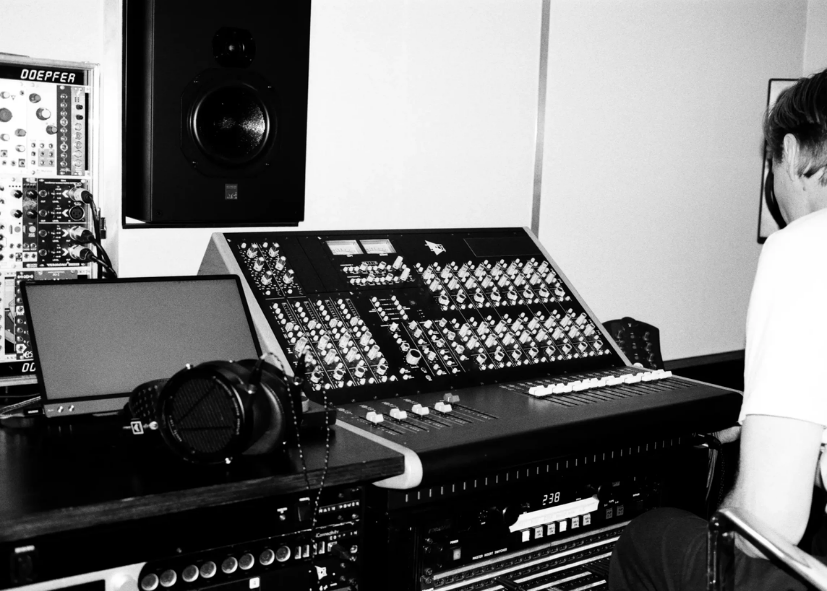
At Baltic Studios, Studio 3 is equipped with a full 7.1.4 ATC Atmos monitoring system and an API ‘The Box’ console, with Atmos services provided in-house by engineer Digby Smith. Recently shortlisted for Small Commercial Studio at the MPG Awards 2026, Baltic is one of a small number of independent studios in London where artists can work in both stereo and immersive formats under the same roof.

Interested in hearing your music in Atmos? Get in touch with the Baltic team to book a session or learn more about immersive audio production.

What Happens at a Writing Camp? A Behind-the-Scenes Look

Writing camps have become one of the most effective ways to create music at pace. They bring together songwriters, producers, vocalists, and topliner specialists under one roof for an intensive burst of creativity, usually lasting anywhere from two days to a full week. The format has produced some of the biggest records of the past decade, and it is now used by major labels, independent artists, and sync teams alike. But for anyone who has never attended one, the process can seem opaque. Here is what actually happens.

The Setup

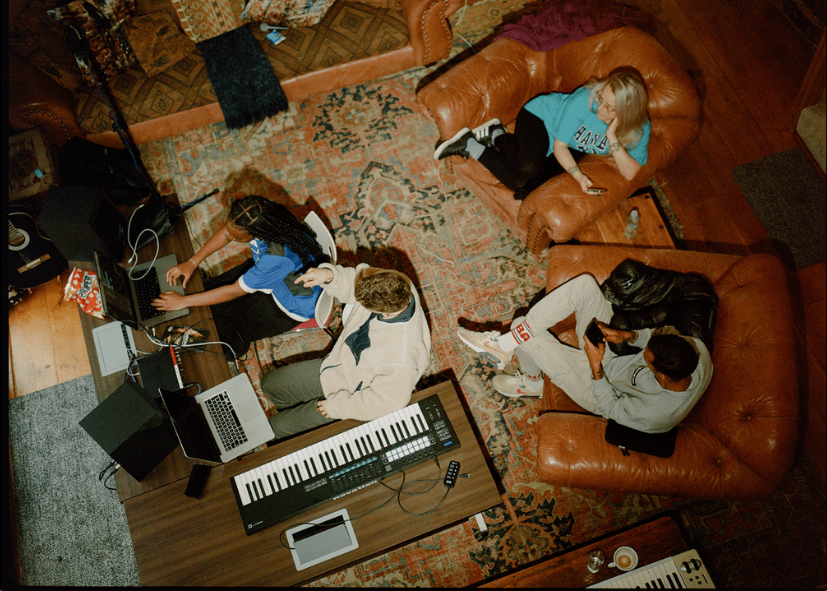
A writing camp typically takes place across multiple rooms within a studio complex. Each room is assigned a producer and a basic production setup, usually a laptop, an interface, monitors, a microphone, and a MIDI controller. Some camps run in larger recording studios London UK facilities where participants also have access to live rooms, outboard gear, and more extensive signal chains, which can elevate demos into near-finished productions within the same session.

The organisers, often a label, publisher, or A&R team, curate the lineup of writers and producers in advance. The goal is to assemble a mix of skillsets and styles that will spark unexpected combinations. A topliner who usually writes pop hooks might be paired with a producer known for electronic or R&B work. A guitarist-songwriter might end up in a room with a beatmaker they have never met. That friction is deliberate. The best writing camps are designed to push people out of their familiar patterns.

Day One: Introductions and First Sessions

The first morning usually starts with introductions. If the camp has a brief, whether that is writing for a specific artist, a sync brief, or an open catalogue session, it gets laid out here. Then the rooms are assigned and people get to work.

A typical session begins with a conversation. The writers in the room talk about references, moods, tempos, and themes before anyone touches an instrument or opens a DAW. From there, one person usually starts building a chord progression or a beat while others begin experimenting with melodies and lyric ideas. The energy is collaborative and fast. There is no time for overthinking. Most camps aim to produce a finished demo by the end of each session, which usually runs four to six hours.

By the end of day one, each room will have produced at least one demo, sometimes two. The tracks are rough but complete enough to communicate the song’s potential. Writers rotate rooms for the next session so that new pairings form throughout the camp.

The Middle Days: Momentum and Rotation

Days two and three are where the camp hits its stride. Writers have loosened up, found their rhythm, and started to understand each other’s working styles. The rotation system means that every session feels fresh. A writer who struggled in one pairing might have a breakthrough in the next.

Studios that offer multiple rooms with different capabilities give camps a real advantage here. A song that starts as a laptop demo in one room can be taken into a properly treated live room to track real drums, guitars, or strings. That jump from programmed demo to a production with live elements can transform a good idea into something that genuinely competes at a professional level.

Meals and breaks are communal, and they matter more than people expect. Some of the best creative decisions at writing camps happen over lunch, when a writer from one room hears a rough playback from another and offers a lyric idea or a structural suggestion. The social aspect is not a luxury. It is part of the creative engine.

The Final Day: Playbacks and Next Steps

The last session is usually followed by a group playback. Every song produced during the camp is played to the full room. This can be nerve-wracking, but it serves an important purpose. It lets the organisers, A&R, and the writers themselves hear the full output and identify the strongest tracks. Songs that land well in a room full of experienced writers tend to land well everywhere else too.

After the camp, selected tracks move into further production, vocal re-recording, professional mixing, and eventually release or placement. Some songs written at camps end up on major albums. Others find homes in film, TV, or advertising sync placements. A significant number never see the light of day, and that is expected. The volume approach is part of the model.

Why the Studio Matters

Not all writing camps are equal, and the facility plays a bigger role than many people realise. Camps held in studios with proper acoustic treatment, quality monitoring, and flexible room configurations consistently produce better results than those run in makeshift spaces. Access to Dolby Atmos and immersive audio capabilities is also becoming a differentiator, as more labels request spatial audio deliverables alongside stereo masters.

For anyone looking to host or attend a writing camp in one of the top recording studios London UK has available, the environment is not just a backdrop. It is a creative tool in itself. Contact our team today to discuss options.

Baltic Makes Shortlist for MPG Awards 2026

Baltic Studios, an independent recording studio in East London, has been named on the shortlist for the MPG Awards 2026 in the Small Commercial Studio category. The nomination, voted on by members of the Music Producers Guild, places Baltic alongside Snap! Studios and ARC Abbey Recording Studios as one of the UK’s most respected independent recording facilities. The ceremony takes’ place on 16 April 2026 at The Troxy in London, and it marks’ a significant moment for Baltic Studios. 

What Are the MPG Awards?

The MPG Awards, now in their 18th year, are run by the Music Producers Guild and celebrate the best of British production talent working behind the scenes. Unlike fan-voted ceremonies, the MPG Awards shortlist is decided by industry professionals: the producers, engineers, and mixers who actually work in studios day to day. That peer-recognition model is what gives the awards their weight. Categories span Producer of the Year, Breakthrough Engineer, Album of the Year, and the studio categories that recognise the physical spaces where records are made.

This year’s ceremony is supported by Dolby, Mix With The Masters, PPL, PRS for Music, Neve, and Neumann, among others. Dolby’s involvement as a headline sponsor reflects the growing importance of immersive audio formats within professional music production, something Baltic has invested in directly through its Dolby Atmos-equipped Studio 3.

What the Nomination Means for Baltic Studios

Being shortlisted in the Small Commercial Studio category puts studios like Baltic in a select group. The award is judged by a dedicated panel of professional producers and recording engineers who may visit each shortlisted facility in person, assess the space, and vote independently. The nomination signals that Baltic’s rooms, equipment, and engineering team are operating at a level recognised by the people who matter most: the professionals who book studio time.

Why a Recording Studio in East London Matters to the Music Community…

East London has long been home to a distinctive creative ecosystem. From experimental electronic production to classical music, from grime to electronic, the area has shaped some of the UK’s most important musical movements. But the infrastructure that supports that creativity, the studios, the engineers, the technical investment, doesn’t always get the recognition it deserves.

Recording studios have long been a gathering point for musicians, producers and engineers – physical spaces where ideas are exchanged in real time, where tacit knowledge is passed between collaborators, and where music is shaped through shared, embodied experience. Beyond their technical function, studios act as cultural meeting grounds, fostering community, dialogue and creative cross-pollination.

Baltic’s work with its Access to Music program, its partnership with NTS Radio, and its involvement with Power Up – PRS for Music Foundation, nonclassical and ESEA Music all contribute to this picture. Baltic’s studios aren’t just a room for hire. It’s embedded in the local music community, and that’s exactly what the MPG’s studio award is designed to recognise.

What Makes Baltic Stand Out

Baltic offers three distinct studio spaces, each designed for different stages of the recording and production process. Studio 1 is built around a custom SSL G Series console, with an extensive collection of outboard gear and microphones across a live room, control room, and three isolation booths. Studio 2 is a large, open-plan space with high ceilings and natural daylight, centred on an EMT A100 console. It functions as an all-in-one environment suited to bigger tracking sessions, orchestral recording, writing camps, and filming. Studio 3, developed in partnership with Digby Smith, is equipped with a 7.1.4 ATC Atmos system for Dolby Atmos spatial audio production, making it one of a small number of independent facilities in London where artists can record, mix, and master in immersive formats.

Looking Ahead to 16 April

The MPG Awards 2026 ceremony will bring together some of the most accomplished names in UK music production. This year’s shortlist includes nominees like Catherine Marks and James Ford for Producer of the Year, Olivia Dean, Biffy Clyro and Sam Fender in the Album of the Year category, and Disclosure for Self-Producing Artist. Closer to home, Baltic’s own in-house engineer Evie Clark-Yospa has been shortlisted for Breakthrough Engineer of the Year. It’s a strong field across every category, and Baltic is proud to be part of it.

Interested in recording at Baltic Studios? Get in touch to book a session or discuss your project.